时间:2026年8月17日(周一)下午15:45-17:00
地点:西主楼会议室2-203
题目:漂浮式风能波浪能混合能源系统的开发及其在海上风场优化中的应用
Development of floating hybrid wind-wave energy systems and their application in optimization of offshore wind farms
报告人:朱洪忠,日本九州大学副教授
邀请人:肖曦
联系人:林泽川
报告简介
本报告将介绍一种新型漂浮式风能与波浪能耦合系统。针对风能与波浪能协同利用问题,研究将波浪能转换装置(WEC)集成于浮式风电平台,并开展浮体平台与WEC的协同形状设计(co-design),综合考虑平台稳性、水动力性能、WEC能量捕获效率以及风机运行性能,探索不同平台与WEC几何参数及布置方式对整体系统性能的影响。在此基础上,通过WEC实现波浪能的回收,同时利用其主动控制能力抑制浮体的纵摇、横摇等运动,从而改善风机运行环境并提高系统的稳定性与结构可靠性。进一步研究WEC与浮体之间的动力学耦合机制,以及风浪耦合作用下系统的动态响应和控制特性。近期研究进一步将WEC的功能拓展至浮式风机位置与风场布局主动优化。利用WEC让浮式风机能够根据来流风向及风场条件进行小范围的repositioning,从而动态调整风机间的相对位置和风场布局,提高风场整体发电效率。该方法有望突破传统固定式风场布局对环境变化适应能力有限的局限,实现风场布局与风况之间的动态匹配。
This report presents a novel hybrid floating system that integrates wind and wave energy. Aiming at the synergistic utilization of wind and wave energy, this study integrates wave energy converters (WECs) into a floating wind turbine platform and conducts a co-design of the floating platform and the WEC geometry. The study comprehensively considers platform stability, hydrodynamic performance, and wind turbine operational performance, and explores the effects of different platform and WEC geometric parameters and layout configurations on the overall system performance. On this basis, the WEC is employed to harvest wave energy while its active control capability is utilized to suppress the pitch and roll motions of the floating body, thereby improving the wind turbine operating environment and enhancing system stability and structural reliability. Furthermore, the dynamic coupling mechanism between WECs and the floating body, as well as the system's dynamic response and control characteristics under coupled wind-wave actions, are investigated. Recent research has further extended the WEC's functionality to active optimization of floating wind turbine positioning and wind farm layout. By using WECs, the floating wind turbines can perform small-scale repositioning in response to incoming wind direction and farm-site conditions, thereby dynamically adjusting the relative positions among turbines and the overall wind farm layout to improve the overall power generation efficiency of the farm. fixed wind farm layouts in adapting to changing environmental conditions, achieving dynamic matching between wind farm layout and wind conditions.
报告人简介
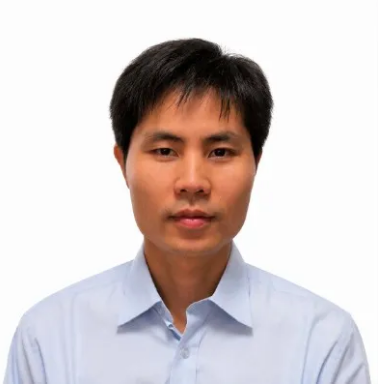
朱洪忠博士现任日本九州大学应用力学研究所副教授。他于2014年获东京大学电气工程博士学位,主攻机电一体化系统的精密控制与非线性优化算法。2015年,他加入九州大学应用力学研究所,主持了大型风车动力传动系统减振控制与漂浮式风车数学模型开发等核心课题,率先提出利用波浪能发电主动抑制浮体平台晃动的控制策略,并创新性地设计并完成了风能-波浪能混合系统的水槽实验。在九州大学期间,他也深度参与了多项海洋新能源开发项目,涵盖海上漂浮式架空送电系统开发、多浮体拖航系统动态分析与自动拖航控制等。2022年,他加入OWC海上风能咨询公司,担任15MW大型浮式风车工程项目管理,负责浮体最优化设计、以及海上风场可行性与经济性分析。2023年,他重返九州大学,继续主持漂浮式风能与波浪能耦合系统研发、TLP漂浮式风车最优化设计以及漂浮式风车数字孪生等关键领域的研究工作。迄今,他已发表会议及期刊论文70余篇,获授权专利4项,发布开源程序若干,并先后荣获8次优秀论文发表奖。此外,他还是电气电子工程师学会(IEEE)、日本计测自动控制学会(SICE)及日本船舶海洋工学会的会员。
Hongzhong Zhu is currently an Associate Professor at the Research Institute for Applied Mechanics, Kyushu University, Japan. He received his Ph.D. in Electrical Engineering from the University of Tokyo in 2014, with a focus on precision control and nonlinear optimization algorithms for mechatronic systems. In 2015, he joined the Research Institute for Applied Mechanics at Kyushu University, where he led core research projects including floating wind-wave hybrid system, vibration suppression control for large-scale wind turbine drivetrains and the development of mathematical models for floating wind turbines. In 2022, he joined OWC Offshore Wind Energy Consulting as a project manager for a 15 MW large-scale floating wind turbine project, responsible for floating body optimization design. In 2023, he returned to Kyushu University to continue leading research in key areas including the development of floating wind-wave coupled systems, optimal design of TLP floating wind turbines, and digital twin technologies for floating wind turbines.











 通知公告
通知公告